Blocked gutters and downpipes in Paisley and Renfrewshire
If water's coming over the gutter or a downpipe gurgles long after the rain stops, something's blocked. Tell us where and we'll pass it to one trusted local firm who'll quote to clear it. Free, and no obligation.
For eleven months of the year a blocked gutter is something you mean to get round to. Then there's a week of heavy rain, water runs down the front of the house and it becomes urgent. It's easier to deal with before that week comes.
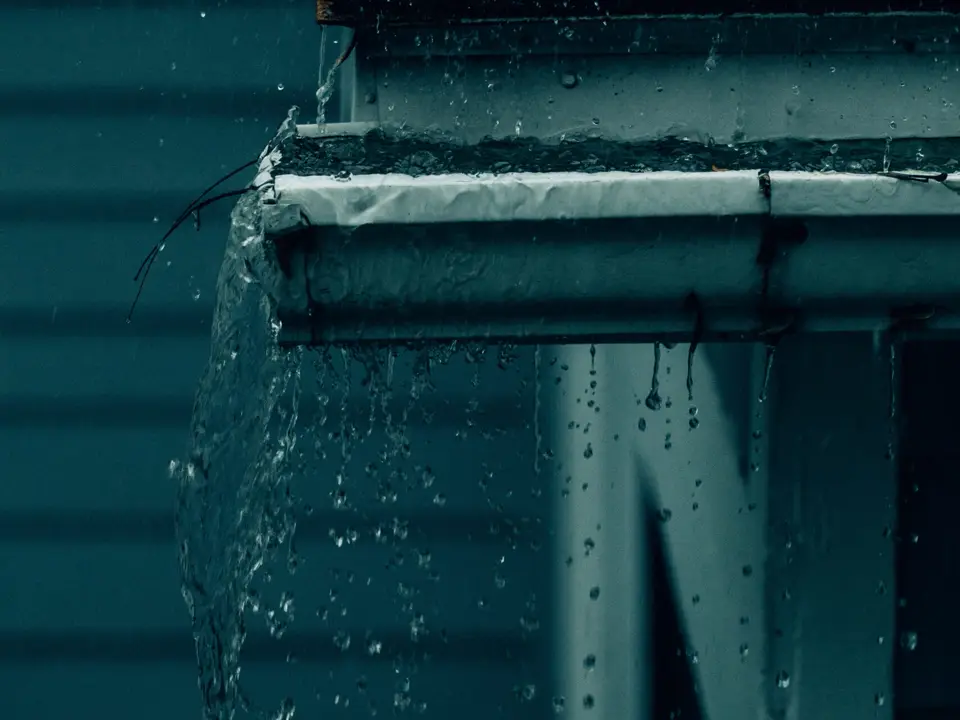
How to tell your gutters are blocked
- Water coming over the front edge in normal rain, not just a cloudburst. That's the clearest sign there is.
- Green streaks on the wall under one stretch of gutter.
- Grass, weeds or moss growing out along the gutter line.
- A downpipe that gurgles, or keeps dripping for ages after the rain has stopped.
- A damp patch inside on an outside wall, often one that gets little sun.
- A length of gutter sagging out of line. That's usually weight, not damage.
You don't need a ladder for any of this. The best time to look is during heavy rain, when a blockage gives itself away straight off. On a dry day a badly blocked gutter can look perfectly normal from the garden.
What actually blocks gutters round here
It's rarely just leaves, which is why clearing them out in November doesn't always solve it. A blocked gutter in Renfrewshire is usually three layers deep.
Moss and silt at the bottom. This is the real blockage. Roofs in the west of Scotland grow moss all year and shed it all year, and it breaks down into a heavy black sludge that packs into the bottom of the gutter. Houses with a lot of moss on the roof nearly always need clearing more often than the usual twice a year.
Leaves and twigs on top. The bit you can see, and the easy bit. Lifting it out makes the gutter look done when the sludge underneath is still there.
A plug in the downpipe. Usually at the bend near the top, or in the hopper if your house has one. This is the most common reason a gutter still overflows after it's been "cleared".
Add to that grit washed off older concrete tiles, and nests: birds in spring, wasps in summer, both fond of a hopper head.
What happens if you leave it
Nothing dramatic, at first. The damage builds up over a winter, which is exactly why it gets left.
- Wet walls. Water running down a wall for months soaks in, and on the side that gets the least sun it never dries out. That's how a gutter problem turns into damp inside. On a roughcast or rendered house it also gets into hairline cracks and starts pushing the coating off the wall, which is a bigger bill. Our page on roughcast repairs explains what to look for.
- Rotten fascias and rafter ends. Water tracking behind the gutter gets into the timber it's screwed to.
- Brackets giving way. A blocked gutter holds water, water is heavy, and the brackets pull loose. Then the gutter sags and holds even more.
- Split joints after a frost. Standing water freezes, expands and cracks the joints. It's one of the commonest ways a Scottish gutter fails, and it happens overnight.
One more thing. If you've got a wet patch on a ceiling and the gutters are clear, the problem may be higher up: a slipped slate, a cracked ridge or a blocked valley between two roof slopes. Those need a roofer rather than a gutter clear-out, and our roofers in Paisley page covers that side.
Can you clear them yourself?
Sometimes. On a bungalow or a single-storey extension, with a stepladder on firm, level ground and someone holding it, scooping out the gutter by hand is a fair job for a careful person on a dry, still day.
What isn't a fair job: leaning a ladder on the gutter itself (it bends, and that's how people fall), working in wind or rain, and anything at two-storey height. The Health and Safety Executive has plain guidance on using ladders safely if you're going to try.
And remember the downpipe. Scooping out the gutter does nothing for a plug at the bend, and that's usually where the trouble is.
What a proper clear-out should include
- Everything out of the gutter: moss, silt and leaves, not just the top layer.
- Each downpipe flushed, with water seen running into the drain at the bottom.
- Joints, brackets and the slope of each run looked at. Anything that needs fixing should be priced before it's done, not added to the bill afterwards.
- The rubbish taken away, not left in a bag by the bins.
If the fascias have gone green from all that overflow, it's worth asking for them to be cleaned at the same visit. For how often to book a clear-out, see our guide on how often to clean gutters in Scotland, and for why two quotes can differ, what affects the price.
Get a free quote to clear a blocked gutter or downpipe
Free, no obligation, and your details go to one local firm, not a list.
We don't do the work ourselves. We pass your enquiry to one trusted local firm covering Paisley and Renfrewshire, and they contact you to arrange a price.
We're not taking enquiries through this form just now.
Common questions
How quickly can a blocked gutter be cleared?
Most blockages are cleared in a single visit. If water is pouring down the wall right now, say so in the form and put the timescale as "as soon as possible" so the firm knows it's urgent.
Can a blocked gutter really damage the house?
Yes, slowly. A winter of water running down one wall soaks the masonry, rots the timber behind the fascia and can show up as a damp patch inside. Clearing the blockage costs far less than fixing any of that.
The gutter looks empty but still overflows. Why?
Nearly always the downpipe. Silt and moss settle at the bend near the top or at the shoe at the bottom, and the water has nowhere to go. Clearing the trough and clearing the downpipe are two separate jobs, so make sure a quote covers both.